
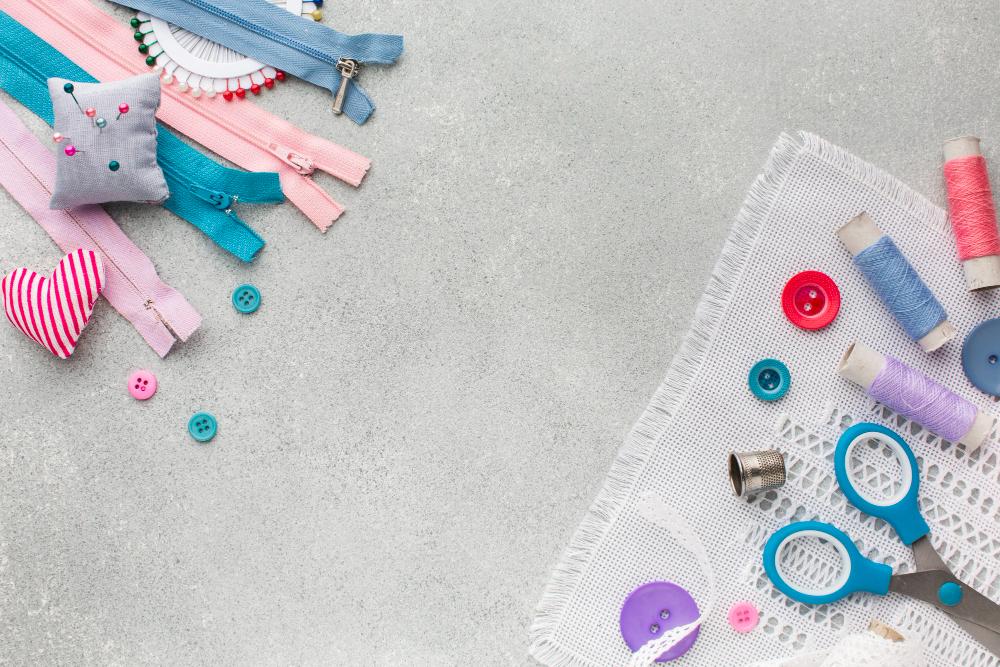
Sewing notions are the small tools, threads, fasteners, trims and accessories used to sew, finish, fasten, measure, mark or repair a project. If you are a beginner, you do not need every notion straight away. The most useful starter notions are thread, needles, pins or clips, fabric scissors, measuring tools, marking tools and a seam ripper. Zips, buttons, elastic, interfacing, wadding and trims are usually project-specific.
Our guide on sewing notions explained will help you separate essentials from nice-to-haves in a simple manner.
Essential Sewing Notions for Beginners
| Sewing notion | Essential or optional? | Why you may need it |
| Sewing thread | Essential | Needed for almost every sewing project |
| Machine needles and hand needles | Essential | Needed for machine sewing, hand finishing or repairs |
| Pins or sewing clips | Essential | Hold fabric pieces in place before stitching |
| Fabric scissors | Essential | Help cut fabric cleanly and accurately |
| Tape measure or ruler | Essential | Used for measuring fabric, seams, hems and fit |
| Marking chalk or fabric pen | Essential | Helps mark darts, notches, hems and placement points |
| Seam ripper | Essential | Useful for correcting mistakes |
| Zips, buttons, elastic or fasteners | Project-specific | Needed only when the pattern or design requires them |
| Interfacing or wadding | Project-specific | Adds structure, support or padding |
| Trims, bias binding or piping | Nice-to-have or project-specific | Adds decoration, finishing or detail |
Our team suggests: Build your sewing kit around the projects you actually want to make. A small, reliable set of notions is more useful than a drawer full of supplies you do not yet understand.
Which Sewing Notions Do Beginners Actually Need?
Beginners only need a small group of reliable sewing notions to get started. Focus first on the items that help you measure, cut, hold, stitch, mark and correct your work.

A small set of reliable sewing notions is enough for many beginner projects.
Thread
All-purpose thread is the most common starting point for general sewing. It works well for many everyday projects, but the thread should still suit the fabric, stitch type and how much stress the seam will take. For more detail, we have a helpful guide on how to choose the right sewing thread.
Machine Needles and Hand Needles
Machine needles should suit the fabric you are sewing and they need replacing regularly. A blunt or damaged needle can cause skipped stitches, snagged fabric or uneven sewing. Hand needles are also useful for repairs, finishing seams, sewing on buttons and adding small hand stitches.
Pins or Sewing Clips
Pins work well for many woven fabrics and help keep layers in place before stitching. Sewing clips can be useful for thicker layers, delicate fabrics or projects where pin holes may show. They are also handy for some bag-making, binding and layered craft projects.
Fabric Scissors
Fabric scissors should be sharp and used only for fabric. Cutting paper, card or general household materials with them can dull the blades and make fabric cutting less accurate. Choosing the right scissors can also make cutting more comfortable and controlled.
Measuring and Marking Tools
Tape measures, rulers, seam gauges, chalk and fabric markers help you sew more accurately. They are used for checking hems, seam allowances, darts, notches and placement marks before stitching. Good measuring and marking habits can prevent small mistakes from becoming bigger problems later.
Seam Ripper
A seam ripper is essential because mistakes happen to everyone, including experienced sewists. It lets you unpick stitches neatly, correct seams and make small adjustments without pulling at the fabric. It is one of the simplest tools in a sewing kit, but often one of the most useful.
Our team suggests: For a first sewing kit, we would prioritise thread, needles, pins or clips, fabric scissors, a tape measure, a marking tool and a seam ripper. These cover most beginner projects without overcomplicating your setup.
What Is the Difference Between Sewing Notions and Haberdashery?
Sewing notions are the individual small items used in sewing, while haberdashery is the wider shop, department or product category that often includes them. In simple terms, notions are the items, and haberdashery is where many of those sewing supplies are grouped together.
Sewing Notions Are the Items
Sewing notions include the smaller supplies that help you sew, fasten, finish or repair a project. Common examples include pins, needles, zips, thread, buttons, elastic and seam rippers. Some are everyday essentials, while others are only needed for certain projects.
Haberdashery Is the Wider Category
A haberdashery section may include many types of sewing notions and related supplies, such as threads, tools, trims, fasteners, needles, pins, zips, interfacing and repair items. Our haberdashery range brings these kinds of sewing supplies together, making it easier to find the smaller items that support your fabric, pattern and project.

Sewing notions range from essentials to nice-to-haves
Build a Sewing Kit Around What You Actually Make
Beginners do not need to buy every sewing notion at once. A smaller kit with useful essentials is often easier to understand, store and use than a large collection of items you may not need yet.
Start with the basics, then add project-specific notions as your sewing grows. Your kit should reflect what you actually make, whether that is dressmaking, repairs, quilting, home sewing, bag-making or crafts.
Through Franklins, readers can explore sewing notions, haberdashery, threads, scissors, needles, fasteners, measuring tools and beginner sewing support in a practical, project-led way.


