
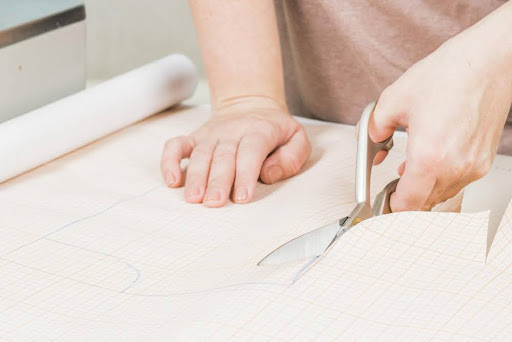
If you’re left-handed and regularly cut fabric, paper or thread, chances are you’ve felt something’s not quite right. Maybe your hand aches after just a few minutes, or your cuts seem to veer off no matter how careful you are. You might blame it on technique or dull blades, but the real culprit could be far simpler: you’re using right-handed scissors without realising it.
Many left-handed sewists and makers have unknowingly adapted to tools designed for right-handed users. Over time, this subtle mismatch can cause hand fatigue, misaligned cuts, and a surprising amount of frustration. In this article, we’ll walk you through how to tell if you’re using the wrong scissors, why it matters, and what to look for in a true left-handed pair, so you can finally cut with comfort and precision.
The Hidden Struggles of Left-Handed Creators
Common Signs You’re Using the Wrong Scissors
Left-handed makers often get so used to compensating for uncomfortable tools that they don’t realise there’s a better option. If any of the following sound familiar, your scissors might not be serving you well:
- Your hand or wrist aches after short periods of cutting.
- You have to apply extra force just to get through fabric.
- Cuts come out jagged or imprecise, especially on delicate or curved lines.
- You can’t clearly see the edge you’re cutting along.
- The blades seem to separate instead of glide smoothly.

Checklist of left-handed sewing issues caused by right-handed scissors
How Right-Handed Scissors Affect Left-Handed Use
Here’s the root of the problem: right-handed scissors are designed so that the top blade sits on the right. When held in the right hand, the blades are naturally pushed together with each snip, ensuring a clean, precise cut. But when a left-handed person uses them, that pressure works against the blades instead of with them.
It’s not just about blade mechanics either. Holding right-handed scissors in your left hand obstructs your view of the cutting line. Many left-handed sewers find themselves twisting their wrists or leaning awkwardly just to see what they’re doing, and over time, that can lead to both poor posture and poor results.
What’s the Difference Between Left-Handed vs Right-Handed Scissors?
Blade Orientation
At first glance, left-handed and right-handed scissors might look the same. But look closely, and you’ll notice one key detail: the blades are reversed. In true left-handed scissors, the top blade sits on the left, allowing a clear line of sight and proper pressure when cutting with the left hand. This alignment ensures the blades meet correctly during the cut, resulting in a cleaner, smoother finish, which is especially important for precision tasks like trimming seam allowances or cutting curved patterns.
By contrast, using right-handed scissors in your left hand means the blades are effectively working against each other. The cutting edge becomes misaligned, and instead of shearing the fabric cleanly, the blades may fold or tear it.
Handle Design
Handle shape matters more than you’d think. Left-handed scissors are ergonomically moulded for the left hand, the finger and thumb holes are angled to support a natural grip, reducing strain during extended use. Standard handles may look symmetrical, but even minor differences in angle can lead to discomfort or awkward posture.
It’s worth noting that some products advertised as “universal” or “ambidextrous” often retain right-handed blade orientation, even if the handles appear symmetrical. These can give a false sense of accommodation while still causing the same visibility and pressure problems as typical right-handed scissors.
Are Your ‘Left-Handed’ Scissors Actually Left-Handed?
A quick check: hold the scissors in your left hand and open them. If the left blade is on top and you can see the full cutting edge as you move forward, they’re likely genuine left-handed scissors.
Still Not Sure? Quick Ways to Test Your Scissors
Test 1: Blade Pressure Check
Hold your scissors in your left hand and open and close them slowly. Do the blades glide together smoothly, or do they feel stiff or misaligned? With true left-handed scissors, the blades will naturally press together when used in the left hand, delivering a clean slice. If the blades feel like they’re separating or snagging, they’re likely right-handed.
Test 2: Straight Line Cut
Try cutting a piece of fabric or paper in a straight line:
- Can you clearly see the cutting line?
- Do you have to tilt your head or the material to keep the edge in view?
- Are your cuts clean from start to finish, or do they look slightly torn or veer off course?
If you’re constantly adjusting your posture or second-guessing your cut, the scissors may be working against your natural hand motion.
Test 3: Compare With a True Left-Handed Pair
If you have access to both types of scissors, even briefly in a shop or workshop, compare the feel side by side. Many left-handed sewers are shocked by how different a true left-handed pair feels: smoother cuts, improved accuracy, and far less tension in the wrist.

Step-by-step illustrations showing how to test scissors for left-handed compatibility
Why the Right Scissors Make a Big Difference
Better Control and Accuracy
Using scissors that match your dominant hand gives comfort and control. When the blades meet properly and the grip feels natural, every cut becomes smoother. This is especially noticeable when trimming curves, working on appliqué, or following a traced pattern. Left-handed scissors let you see the line clearly and guide the blade exactly where it needs to go, without awkward wrist twisting or second-guessing.
Improved Comfort and Posture
A proper left-handed grip reduces strain not just in the hand, but across your forearm and shoulder. Over time, poor posture caused by awkward tools can lead to repetitive strain injuries (RSIs) and tension in the neck and back, particularly for those who sew for extended periods or work professionally. Investing in the right scissors helps protect against long-term discomfort.
Here’s a quick comparison:
| Feature | Right-Handed Scissors in Left Hand | True Left-Handed Scissors |
| Visibility of cutting line | Obstructed | Clear and direct |
| Blade pressure | Often works against motion | Supports clean, precise cutting |
| Comfort | Requires grip adjustment | Natural, ergonomic grip |
| Accuracy | Inconsistent, especially with curves | Sharp and consistent |
Choosing the Best Left-Handed Scissors for Your Needs
Not all scissors are created equal and not all left-handed scissors are suited to fabric. If you’re a sewer, your scissors need to cut cleanly through multiple layers, delicate weaves, or tricky curves. Look for:
- Dressmaking shears with true left-handed blades
- Scissors with a micro-serrated edge for precision on slippery fabrics
- Pairs designed for embroidery, appliqué or thread snipping
For general use (like paper or card), you might prefer a lighter pair with shorter blades; just be sure they still have proper left-handed blade alignment.
Blade Size and Weight
Your cutting style and project type will determine the best size:
- Short blades (4–6″): Ideal for detailed work like trimming seams or notching corners
- Long blades (8–10″): Best for cutting long, smooth edges on fabric or patterns
- Lightweight models: Easier for smaller hands or anyone prone to wrist fatigue
- Heavier steel models: Often more durable and suited to professional use
Premax offers great options in terms of left-handed scissors within Europe for hobbyist and pro use.
Final Tips for Left-Handed Makers
Being left-handed doesn’t mean you have to settle for tools that don’t quite fit. Making a small switch, like upgrading to left-handed scissors, can completely change your experience at the cutting table. And it’s not just scissors worth thinking about.
Other sewing essentials that may be worth swapping include:
- Rotary cutters: Some models offer blade switching for true left-hand use
- Seam rippers: Look for ergonomic handles shaped for left-handed grip
- Measuring tapes and rulers: A few are printed right-to-left to support left-hand reading
If you’re ready to upgrade your kit, explore our full range of left-handed sewing tools and expert advice at Franklins.