
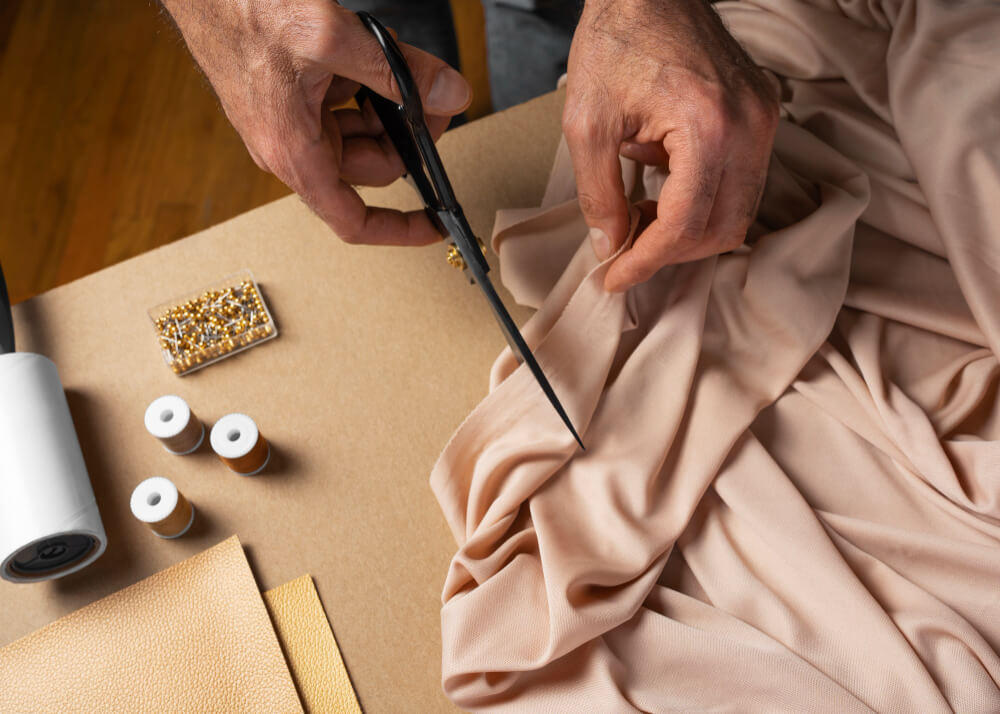
If you’ve ever finished sewing a garment only to find the fit feels off or the neckline sits strangely, you’re not alone. Whether you’re sewing a tailored blazer or a simple shift dress, questions about whether to make a muslin, or toile, before cutting into your main fabric are bound to come up. It’s an extra step, and for many, it feels like a delay. But skipping it can mean investing hours (and metres of fabric) into something that doesn’t work for your shape or style.
Our post here explores when it’s actually worth making a toile, and when you can confidently skip it. From testing out new patterns and tricky techniques to handling expensive or irreplaceable fabrics, we’ll walk through how to make the call. Because while you don’t need one every time, knowing when to toile can save time, money, and frustration in the long run.
What Is a Muslin or Toile?
A muslin (or toile, as it’s often called in the UK) is a rough version of a garment sewn in inexpensive fabric to test the fit, shape, or construction before you cut into your final fabric. Essentially it’s a wearable draft, not finished, not fancy, but incredibly useful.
You don’t need to include facings, linings, zips, or decorative finishes. The focus is purely on structure: seams, darts, lengths, proportions, and how the garment behaves on your body. It’s especially useful when you’re sewing a pattern for the first time or making design adjustments like altering necklines or sleeves.
Common Materials & Tools
Most sewists use calico, muslin, or any inexpensive woven fabric that mimics the weight and drape of their final choice. Ideally, your toile should be easy to pin, mark, and unpick, so no need for fancy finishes here.
Typical supplies for toile-making might include:
- Lightweight calico or similar test fabric
- Contrast thread for visible stitching and markings
- Tailor’s chalk or washable marker
- Long machine stitch length for easy unpicking
- Pins and notepaper for noting any fit changes directly on the fabric
When Do You Need a Muslin?
Fitted Garments and Complex Designs
If your project involves a close-fitting bodice, shaped seams, or tailored lines, such as blazers, structured dresses, or trousers. These styles rely on precision to flatter, and even a small adjustment to a dart or shoulder seam can improve both comfort and silhouette.
Patterns with features like princess seams, pleats, or collars also benefit from a test run. It gives you the chance to check balance, adjust ease, and confirm that key design lines sit where they should.
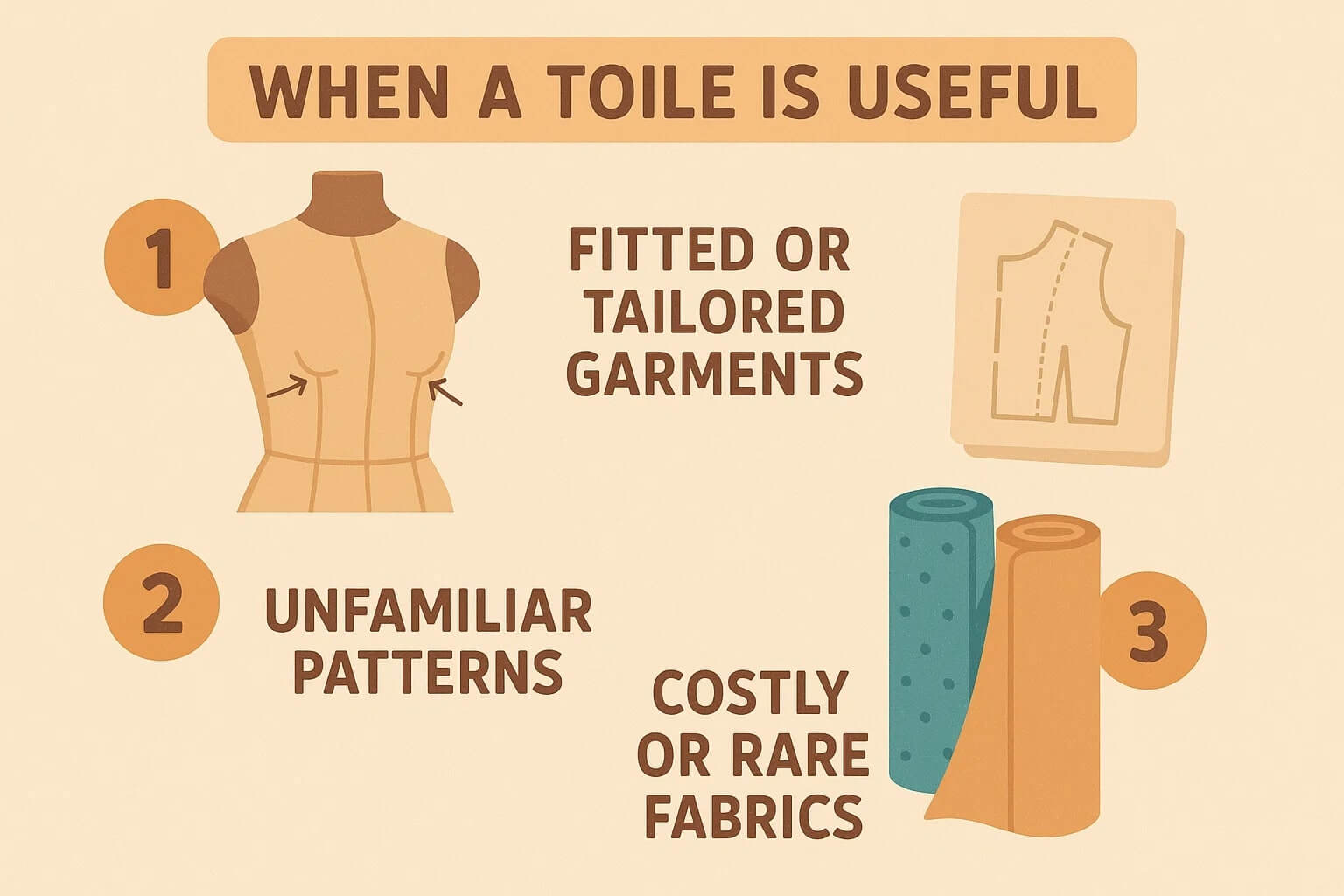
Showing when to use a muslin before sewing
If You Don’t Fit the Pattern ‘Straight Out of the Packet’
Most commercial patterns are based on standard body blocks, but very few people match those measurements exactly. If you’re between sizes, have a full bust, narrow shoulders, or longer torso, making a toile helps you spot fitting issues early. It’s also a great way to avoid overfitting or compromising the overall design.
In these cases, a toile acts like a dress rehearsal, helping you fine-tune length, adjust darts or seams, and personalise the pattern before you cut into your good fabric.
When Working with Costly or Irreplaceable Fabric
Some fabrics are simply too valuable to risk. Whether you’ve splurged on wool crepe, limited-edition prints, or a vintage remnant, a toile offers peace of mind. It lets you test cutting layouts, gauge how much ease you prefer, and spot potential design changes before making permanent cuts.
This is especially important when working with directional prints, plaids, or delicate weaves where mistakes can’t be hidden easily.
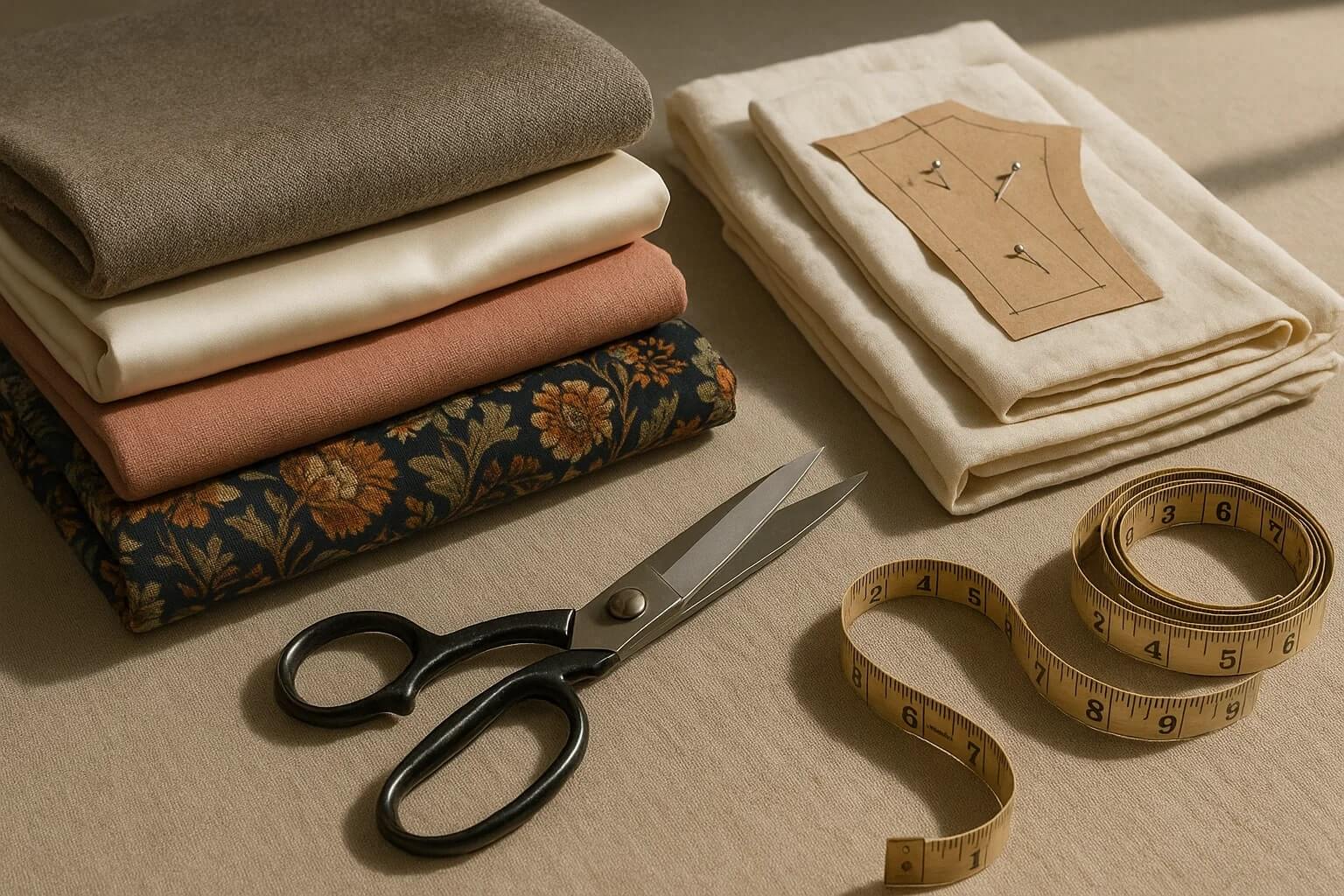
Stack of expensive or rare fabrics beside a folded test toile
When Can You Skip the Muslin?
Simple, Relaxed-Fit Patterns
Not every garment calls for a test version. If you’re making something loose-fitting with minimal shaping, like a shift dress, boxy top, or gathered skirt, a toile may not be necessary. These styles typically have more ease built in, which makes them forgiving if the fit isn’t perfect first time.
Many sewists choose to go straight to their fashion fabric when working with patterns that have:
- No darts or princess seams
- Elastic waists or adjustable ties
- Oversized silhouettes
- Clear finished measurements provided
If you’re using a fabric that’s easy to work with and you’ve checked your sizing, you can usually proceed with confidence.
Tried-and-Tested Patterns
Once you’ve made a pattern successfully and know how it fits you, there’s usually no need to make a muslin again unless you’re making significant alterations. Small tweaks like shortening a hem or changing sleeve length can often be done directly on the paper pattern or during the sewing process.
Many sewists keep a mental list of “tried-and-true” patterns they can rely on for quick projects or gift sewing. In those cases, saving time is worth more than making another test piece.
Making the Most of Your Toile
A toile doesn’t need to be perfect. In fact, it shouldn’t be. Skip anything not essential to checking the shape or fit. That means no facings, zips, linings, or topstitching unless they directly affect the structure you’re testing.
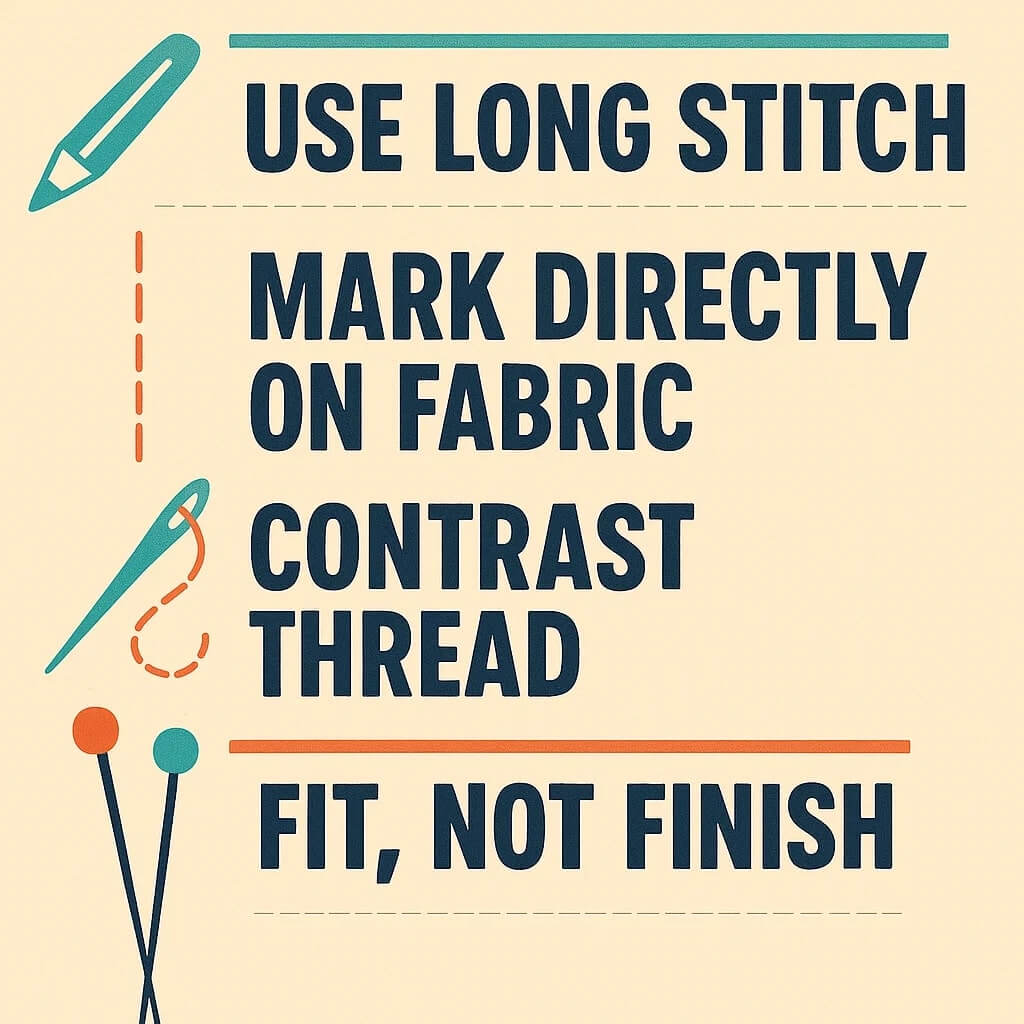
Quick tips for toile-making success
Some quick tips:
- Use a longer stitch length so you can unpick easily
- Mark darts, adjustments, or fit notes directly on the fabric with chalk or pen
- Use contrast thread to help you see what’s happening at seams or curves
This version is for learning, not finishing. Prioritise efficiency over polish.
Fit and Movement Matters
Try on your toile and move around in it. Sit, raise your arms, walk, and twist. This gives you a better sense of how the garment behaves with real movement. Is there pulling across the back? Does the shoulder seam sit too far forward? Are you happy with the waist height?
Use pins or fabric tape to adjust lines directly on the toile, or slash and spread areas that need room. These changes can then be transferred back to your paper pattern.
Consider a Wearable Toile
If you’re working with a pattern that seems promising and you’re using mid-range fabric, consider making a “wearable toile.” This version lets you test the fit and still end up with a usable garment, even if it’s not perfect. It’s ideal for casual patterns where you’re happy to practise and learn as you go.
So, Do You Really Need a Toile Every Time?
The short answer is: not always. The longer answer depends on what you’re making, how well the pattern fits you, and what kind of fabric you’re using. For closely fitted garments, new or unfamiliar patterns, and valuable materials, a toile is often well worth the extra step. It gives you control, builds confidence, and helps avoid disappointment.
On the other hand, if you’re working with a relaxed-fit pattern you’ve used before or making minor tweaks, skipping the toile can be a perfectly reasonable choice. Sewing is personal, and so is your process. The key is knowing when to invest the time and when you can trust your instincts.
If you’re ready to get started or want to level up your pattern work, explore tools, calico fabric, and other dressmaking essentials over at Franklins. We’re here to help make every project your best yet.