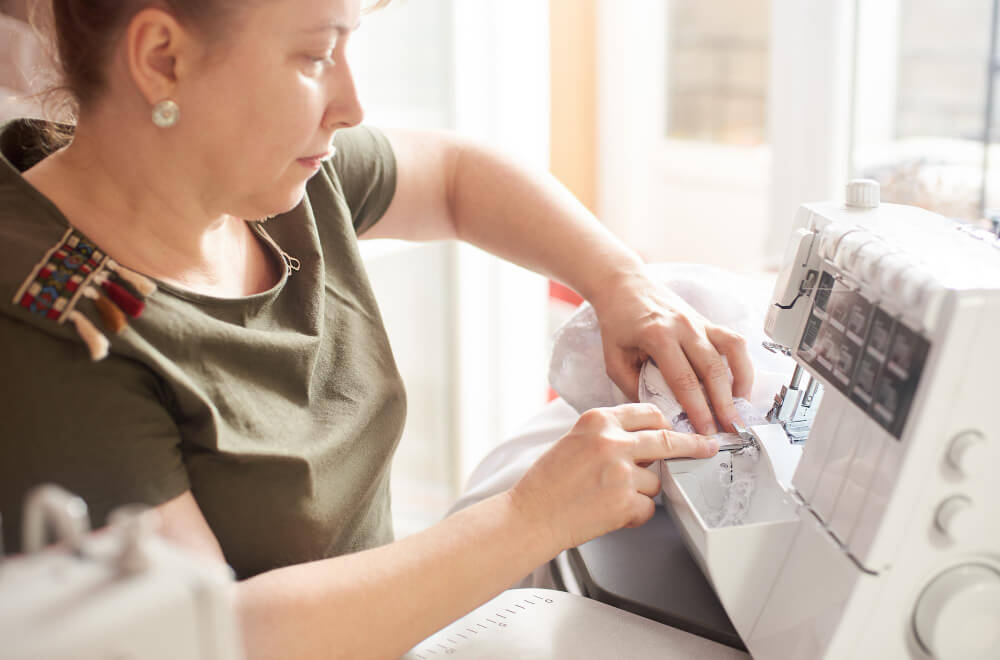
Many sewists hear the word “overlocker” and assume it’s a specialist machine reserved for advanced projects. Others believe it replaces a sewing machine altogether. We often speak to customers who are unsure whether they need one or what it actually does.
In simple terms, an overlocker is designed to trim, stitch, seam, and neaten fabric edges in one smooth step, giving garments a clean, professional finish. It’s particularly useful for stretch fabrics and for preventing woven fabrics from fraying. In this guide, we’ll explain how an overlocker works, how it differs from a standard sewing machine, and when it genuinely makes sense to add one to your sewing setup.
Understanding What an Overlocker Actually Does
In the UK, we call it an overlocker. In the US, it’s often referred to as a serger. The function is the same. Unlike a standard sewing machine, an overlocker trims the fabric edge as it stitches. This means it cuts away excess seam allowance and wraps thread around the edge at the same time. The result is a clean, durable finish that looks similar to what you see inside shop-bought garments.
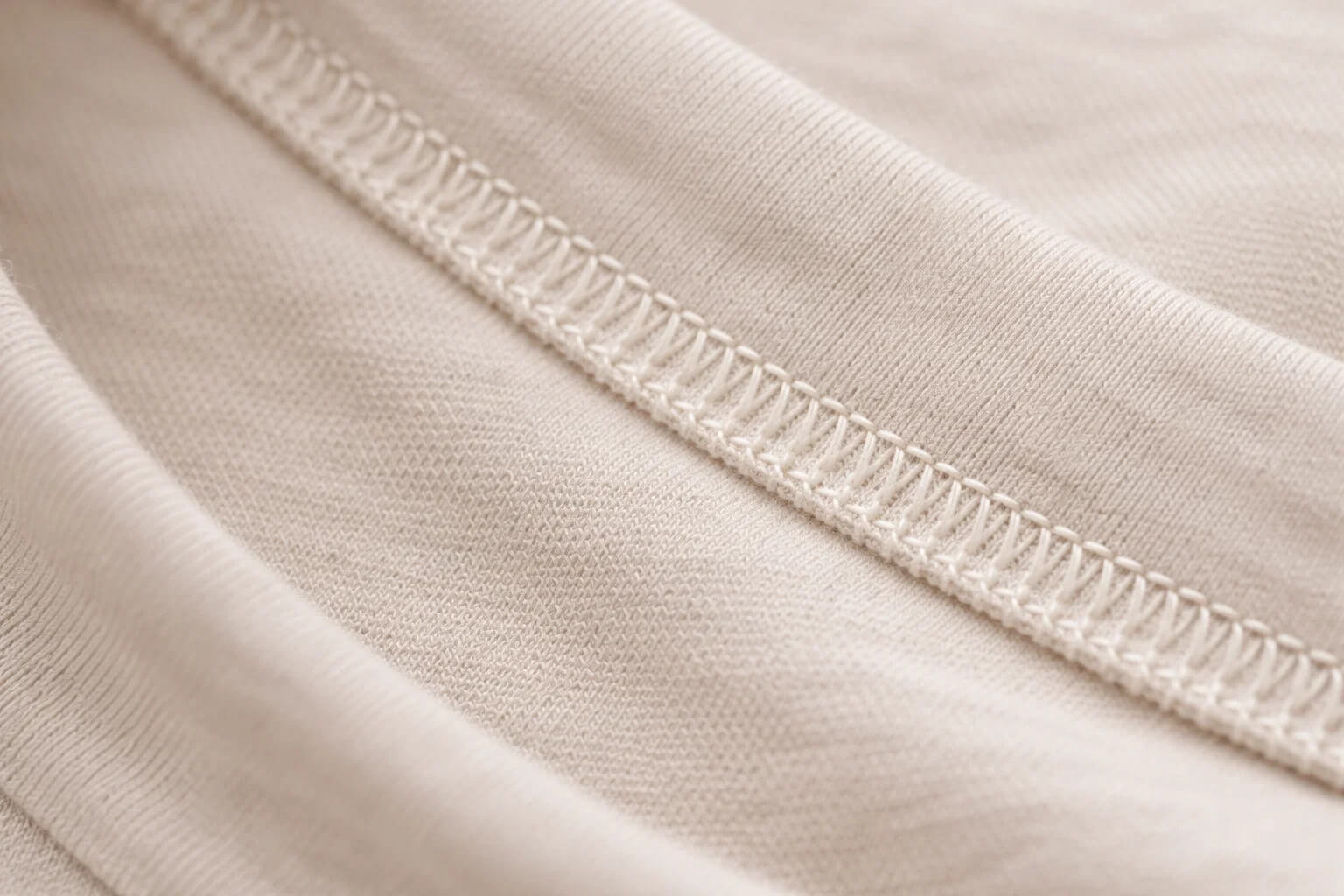
The finish inside most ready-made garments is overlocked
What Is an Overlocker Used For?
At its core, an overlocker is used to:
- Prevent woven fabrics from fraying
- Construct stretch garments with flexible seams
- Neaten seam allowances quickly and consistently
- Improve the internal finish of clothing
It does not replace a sewing machine (although it can for some garments). Instead, it complements one. A sewing machine builds the structure of a garment. An overlocker refines and strengthens the edges.
We find that many sewists first consider an overlocker when they begin sewing garments regularly. The improvement in speed and seam finish becomes noticeable very quickly.
How an Overlocker Works
At first glance, an overlocker can look more complicated than a standard sewing machine. There are more threads, more guides and no visible bobbin. Once you understand the basics, it becomes much less mysterious.
No Bobbin, Multiple Threads
A regular sewing machine forms stitches using one top thread and a bobbin underneath. An overlocker works differently. It uses loopers instead of a bobbin, along with two, three or four threads depending on the stitch type.
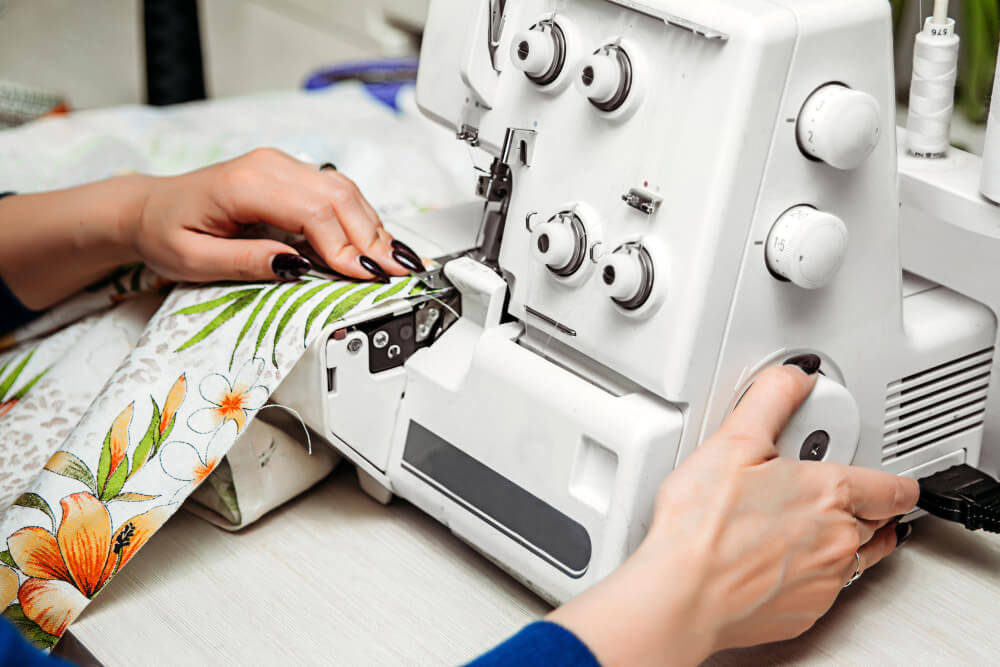
Overlockers use loopers instead of a bobbin
These threads interlock around the edge of the fabric rather than through the centre of it. That is what creates the wrapped, enclosed finish.
The Built-In Cutting Blade
One of the defining features of an overlocker is the cutting blade. As you guide the fabric through, the blade trims the raw edge just before it is stitched.
This means:
- The seam allowance is neat and even
- Excess fabric is removed automatically
- The finished edge looks consistent across the entire seam
Flexible Stitch Formation
Because of the way the threads loop around the fabric edge, the seam can stretch without snapping. This is why overlockers are particularly popular for knit garments and activewear.
In practical terms, using an overlocker follows a simple process:
- Thread the machine correctly
- Adjust stitch settings if needed
- Guide the fabric through evenly
- Allow the machine to trim and finish in one pass
Once set up, the workflow is smooth. Many sewists find that after the initial learning curve, overlocking becomes one of the most satisfying parts of garment construction.
Overlocker vs Sewing Machine
One of the most common questions we’re asked at Franklins is how an overlocker differs from a sewing machine. They sit side by side in many sewing rooms, yet they serve distinct purposes.
A sewing machine is versatile. It constructs seams, topstitches, inserts zips, creates buttonholes and handles decorative stitching. It is the foundation of most sewing setups. However, because it uses a lockstitch it can only imitate an overlocker.
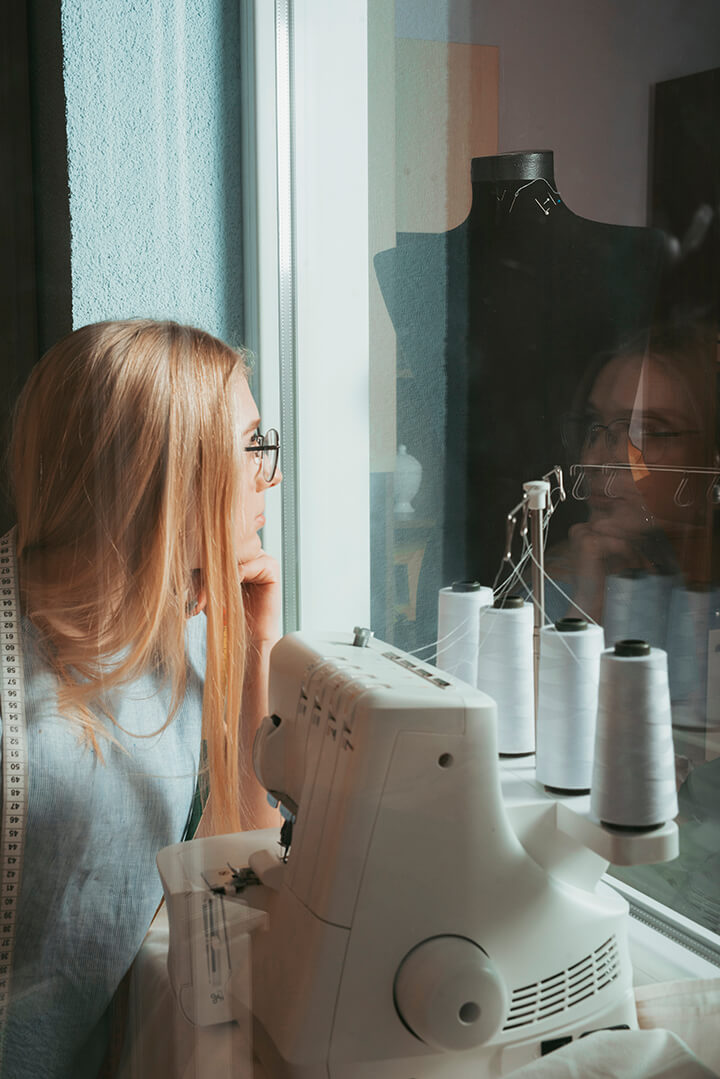
Overlocked seams stretch without snapping
An overlocker is more specialised. It focuses on trimming and finishing edges quickly and creating stretch-friendly seams
Key Differences at a Glance
- A sewing machine uses one needle and a bobbin
- An overlocker uses multiple threads and loopers
- A sewing machine does not trim fabric as it sews
- An overlocker cuts and finishes in one step
- A sewing machine offers wider stitch variety
- An overlocker prioritises speed and seam finishing
For most sewists, the sewing machine comes first. The overlocker becomes useful when garment sewing becomes more frequent or when cleaner internal finishes are a priority.
Do You Still Need a Sewing Machine?
Yes. An overlocker cannot replace a sewing machine.
It does not produce standard straight stitches for visible topstitching. It cannot sew buttonholes. It does not insert zips or handle detailed construction work in the way a sewing machine does.
An overlocker is designed to work alongside a sewing machine, not instead of one.
Can You Overlock With a Normal Sewing Machine?
You can achieve a similar effect. You cannot replicate it entirely.
Most modern sewing machines include a zigzag stitch or an overedge stitch designed to neaten raw edges. These stitches wrap thread over the fabric edge to reduce fraying, and for many projects, they work perfectly well.
What a Sewing Machine Can Do
With the right stitch, you can:
- Finish seam allowances to prevent fraying
- Create flexible seams for light stretch fabrics
- Neaten edges on woven fabrics
Where It Differs
A sewing machine does not trim the fabric edge automatically. You must cut and manage the seam allowance yourself. The stitch also sits differently. It secures the edge, but it does not enclose it in the same way an overlocker does. An Overlock stitch is similar to a knitted stitch, this allows for better movement in the fabric and is less likely to distort the fabric while stitching.
The result is practical and durable, though not as fast or as uniform as a true overlocked finish.
For many sewists, this is perfectly acceptable. The decision to move to an overlocker usually comes down to efficiency rather than necessity.
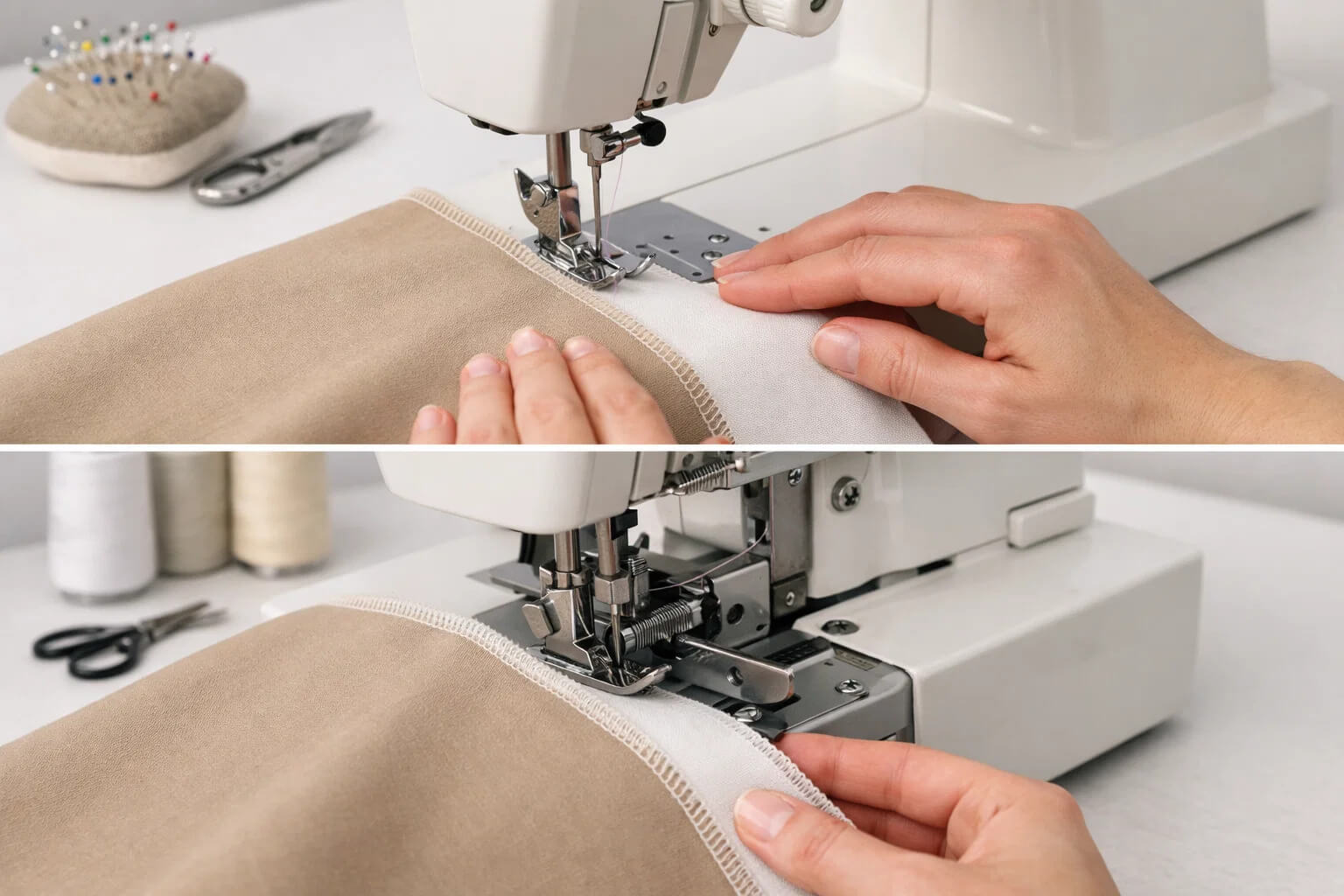
Sewing machine builds structure, overlocker refines the edge
When Should You Use an Overlocker?
An overlocker becomes particularly useful when sewing garments regularly. The difference in speed and consistency is noticeable.
Typical Uses of an Overlocker
- Constructing stretch garments such as T-shirts and loungewear
- Finishing woven seam allowances quickly
- Sewing items that will be washed frequently
- Creating professional-looking internal finishes
On woven fabrics, many sewists overlock seam allowances after sewing the main seam with a standard sewing machine. On knit fabrics, the overlocker is often used during construction itself, forming the seam and finishing it at the same time.
A Specialist Tool That Supports Your Sewing
An overlocker is not a replacement for a sewing machine. It is a focused, efficient tool designed to trim and finish seams neatly, particularly on stretch fabrics and fray-prone woven materials. For occasional sewing, a standard machine with the right stitch will often be enough.
As sewing becomes more frequent or garment-focused, an overlocker can improve speed, consistency and internal finish. It reduces time spent managing seam allowances and produces a professional look that many sewists value.
At Franklins, we always encourage choosing tools based on how you sew now, not what you feel you should own. When the time is right, an overlocker becomes a practical addition rather than an upgrade for the sake of it.
What to Remember About Overlockers
- An overlocker trims and finishes fabric edges in one step
- It uses multiple threads and loopers instead of a bobbin
- It is ideal for stretch garments and preventing fraying
- It does not replace a sewing machine
- A sewing machine can mimic overlocking with zigzag stitches
- It becomes most useful when sewing garments regularly