
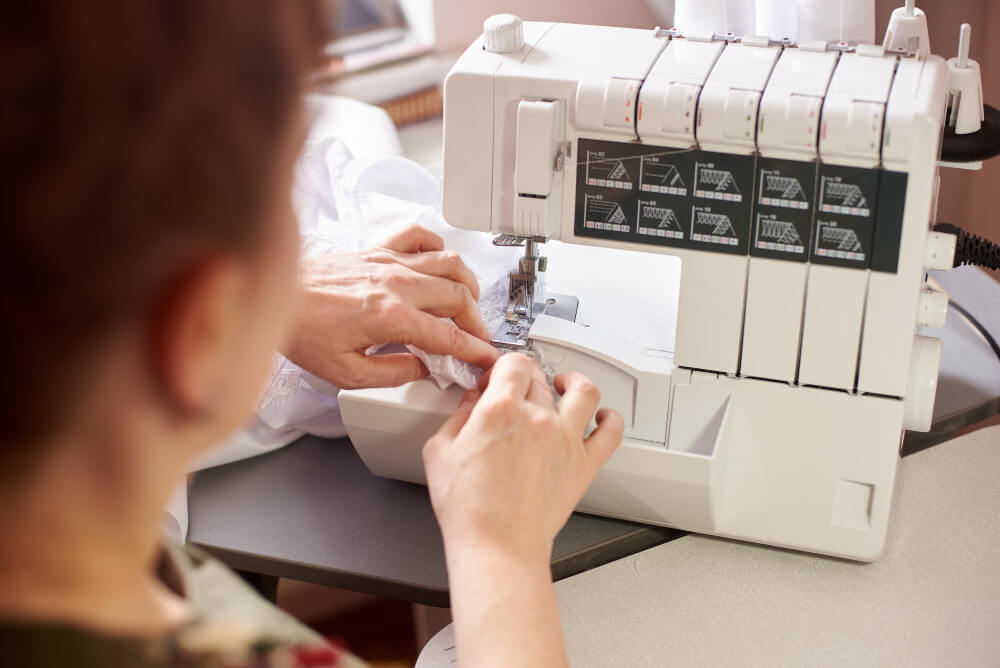
Many sewists believe they need a serger before they can even attempt stretch fabric. We hear this often, especially from customers who want to try sewing T-shirts, lounge sets or children’s clothes but feel held back by their equipment. The truth is that a regular sewing machine is more capable than most people realise.
Stretch and knit fabrics simply require a few setup changes and a different approach. In this guide, we’ll explain how to sew stretch fabric without a serger, including the right needles, stitch settings and practical handling techniques, so you can work confidently with jersey and other knits using the machine you already own.
Yes, You Can Sew Stretch Fabric With a Regular Sewing Machine
A serger is useful, but it is not a requirement. This is one of the biggest misconceptions around sewing with knits. In reality, most modern domestic sewing machines are perfectly capable of handling stretch fabric when set up correctly.
The key difference lies in how stretch fabric is constructed. Unlike woven fabrics, which are made from threads crossing over and under each other, knit fabrics are formed from interlocking loops. Those loops give the fabric its flexibility. They also mean the seam itself needs to stretch, otherwise it will pop the moment the garment is worn.
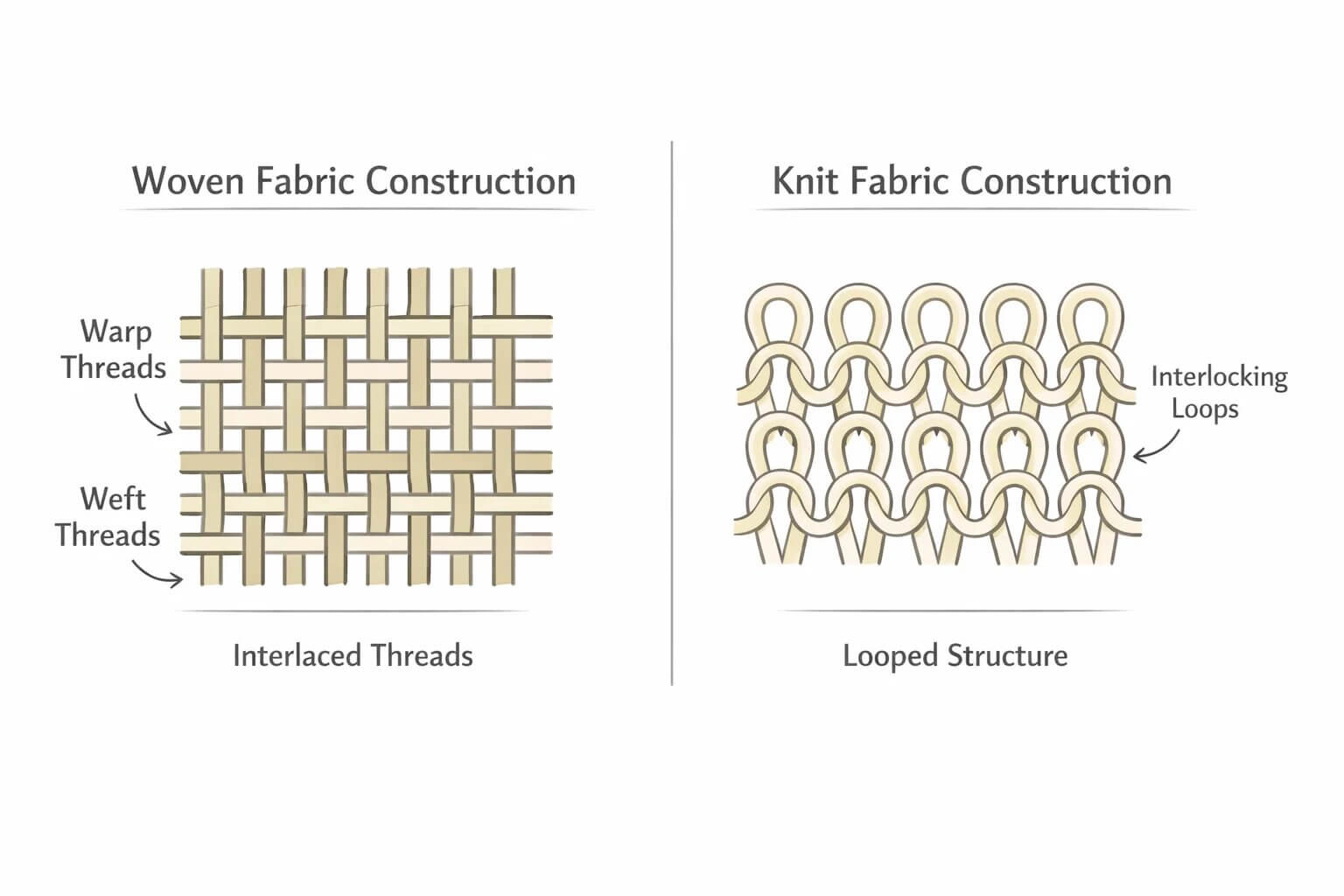
Knit fabrics stretch because of looped construction, not crossed threads
A regular sewing machine can create flexible seams. You simply need to:
- Choose the correct stitch
- Use the right needle
- Allow the machine to feed the fabric naturally
The Most Important Setup Changes
Before you even begin sewing, small adjustments make a noticeable difference. Stretch fabric does not usually require expensive accessories. It requires the right preparation.
Use the Right Needle
If there is one change that solves most knit problems, it is this.
Ballpoint or stretch needles are designed to slide between the fibres of knit fabric rather than piercing through them. This prevents damage and reduces skipped stitches. A universal needle may seem fine at first, but it often leads to uneven stitching or small holes along the seam.
If you notice skipped stitches, change the needle first. Even experienced sewists forget how much difference a fresh needle makes.
Choose a Stretch-Friendly Stitch
A straight stitch does not stretch. That is why seams sometimes snap the first time a garment is pulled on.
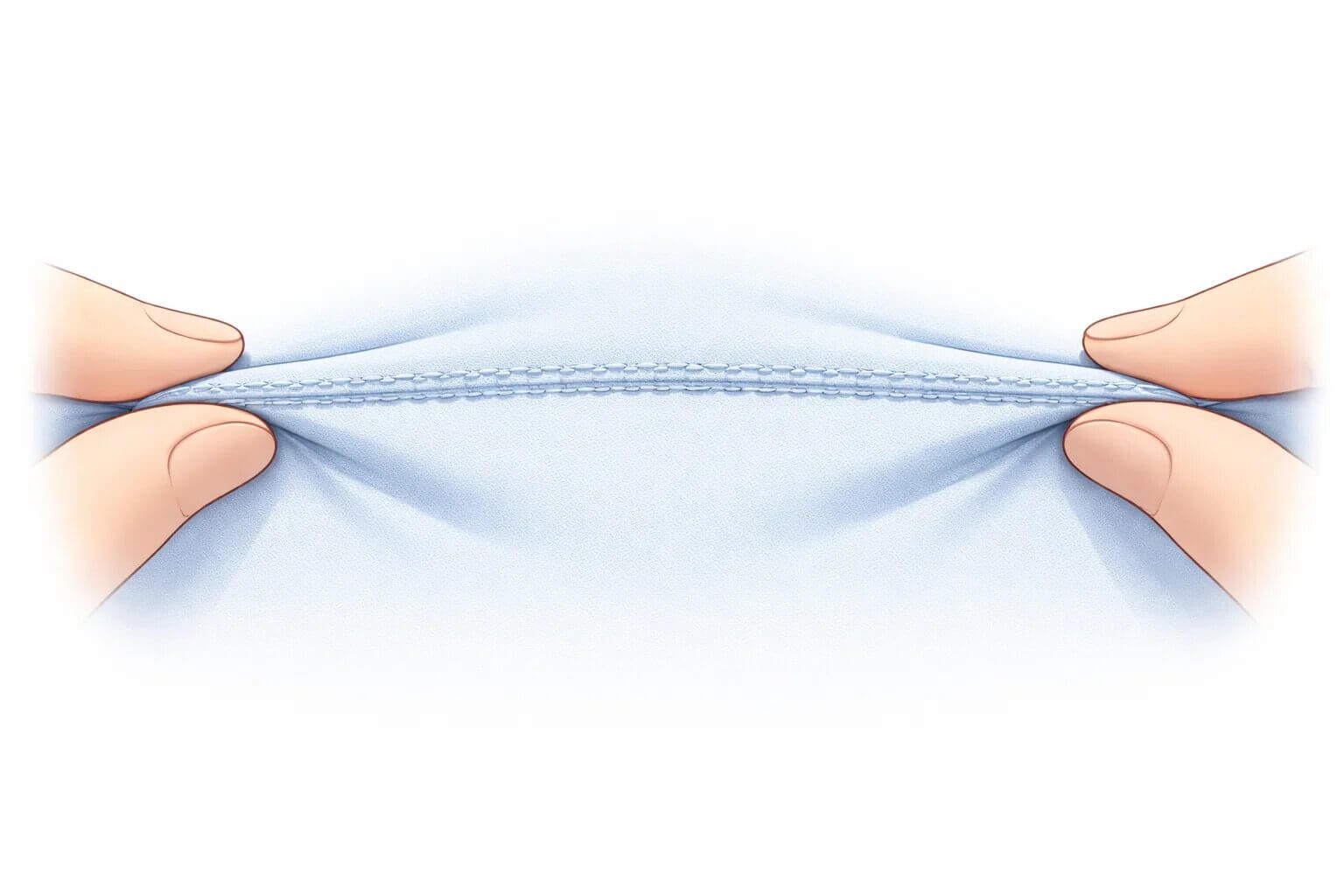
A good stretch seam moves with the fabric
Instead, use a stitch that allows movement. Most machines include at least one suitable option:
- Narrow zigzag stitch
- Lightning bolt stretch stitch
- Triple stretch stitch
Keep the zigzag subtle. Too wide and it becomes bulky. Too narrow and it loses flexibility. Always test on a scrap piece first. Stretch the seam gently after sewing. If the stitches hold without breaking, you are set correctly.
How to Prevent Wavy Seams
Wavy seams are one of the most common frustrations when sewing stretch fabric. The fabric looks flat before stitching, then ripples as soon as the seam is finished. This usually isn’t a fault with the machine. It’s about how the fabric is handled.
First, resist the instinct to pull. Stretch fabric only needs gentle guidance. Let the feed dogs do the work. Even slight tension from your hands can distort the fabric and create waves.
If your machine allows it, reduce the presser foot pressure. Too much pressure pushes and stretches the fabric as it feeds through, especially with lighter jerseys.
For particularly soft or thin knits, a simple stabilising trick can help:
- Place a strip of tissue paper under the seam while sewing
- Stitch as normal
- Tear the paper away carefully afterwards
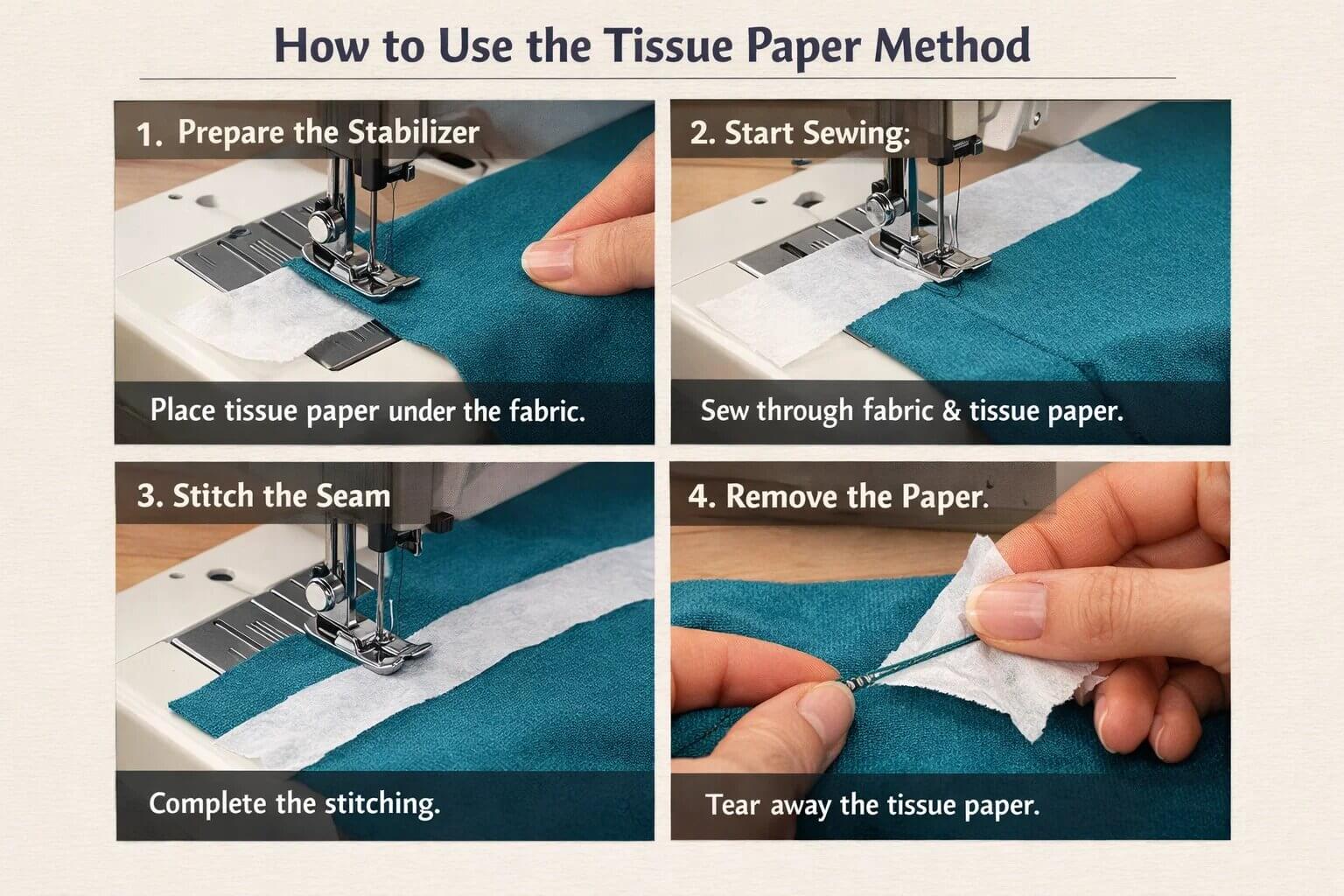
Tissue paper adds temporary stability
Managing Raw Edges Without a Serger
One advantage of knit fabrics is that they do not fray in the same way woven fabrics do. This alone removes a layer of complexity. In many cases, raw edges can simply be left as they are inside the garment.
That said, there are times when you may still want to neaten the seam allowances. It can improve comfort, durability, and overall appearance.
Do You Need to Finish Knit Edges?
Often, no. Most jersey and stretch fabrics will not unravel at the cut edge. If the seam sits flat and feels comfortable against the skin, leaving it unfinished is perfectly acceptable.
For garments that will be washed frequently, or where the fabric curls at the edges, a simple finish can help.
Finishing Options on a Regular Sewing Machine
You do not need a serger to tidy knit seams. A few practical alternatives include:
- A narrow zigzag stitch along the seam allowance
- An overedge stitch if your machine includes one
- Trimming the seam allowance neatly and pressing flat
Hemming Stretch Fabric Without Special Machines
Hems are where many sewists lose confidence with knits. The fabric stretches. The seam pops. The finish looks uneven. It does not have to be complicated.
The Twin Needle Option
A twin needle is one of the simplest ways to create a professional-looking hem on stretch fabric using a regular sewing machine. It produces two parallel lines of stitching on the right side and a zigzag underneath, which allows the hem to stretch.
It looks similar to a coverstitch finish found on shop-bought garments, but it can be done on most domestic machines.
A few practical tips:
- Use a stretch or ballpoint twin needle
- Slightly loosen the top tension if tunnelling occurs
- Test on a scrap piece before hemming the garment
A Simple Zigzag Hem
If you do not have a twin needle, a narrow zigzag works well. Keep it subtle so it does not look decorative unless that is your intention.
This method is particularly useful for children’s garments, loungewear, or casual pieces where comfort matters more than appearance
Common Problems and How to Fix Them
Even with the right setup, small issues can still appear. The good news is that most knit-related problems have straightforward solutions once you know what to check.
Skipped Stitches
This is usually a needle issue. Either the wrong type, or one that has dulled.
Change to a stretch or ballpoint needle and test again. If the problem disappears, you’ve found the cause. If not, rethread the machine and check that the fabric is feeding evenly.
Thread Snapping When the Seam Is Stretched
This almost always points to stitch choice.
A standard straight stitch cannot stretch. Switch to a narrow zigzag or stretch stitch and test the seam by gently pulling it. The stitches should flex with the fabric rather than resist it.
Fabric Stretching Out of Shape While Sewing
If seams look distorted or wavy, pause and review your handling.
Are you pulling the fabric?
Is the presser foot pressure too high?
Would a strip of tissue stabilise the seam?
Small adjustments usually resolve the issue quickly.
When You Might Eventually Want a Serger
You can sew stretch fabric very successfully on a regular sewing machine. For many sewists, that is enough.
However, there are situations where adding a serger becomes practical rather than essential.
If you find yourself sewing knit garments regularly, especially in larger quantities, a serger can speed up seam construction and produce a clean, durable finish in one step. It trims the edge and encloses it at the same time, which is efficient for repeat projects.
You might consider one if:
- You sew stretch garments frequently
- You want faster seam finishing
- You prefer a professional-looking interior on every project
At Franklins, we often see sewists start confidently with a regular machine and add a serger later once knit projects become a regular part of their sewing.
Stretch Fabric Is More Forgiving Than You Think
Sewing stretch fabric without a serger is not a compromise. With the right needle, a flexible stitch, and careful handling, a regular sewing machine can produce strong, comfortable, and professional-looking results. Most problems people associate with knits come down to setup rather than equipment.
Once you understand how stretch fabric behaves, it becomes far less intimidating. Test on scraps, adjust one setting at a time, and let the machine do the feeding. Confidence builds quickly when the basics are right.
If, over time, you find yourself sewing stretch garments often and want greater speed or efficiency, adding a serger can make sense. Until then, the machine you already own is more capable than you might expect.
Quick Reference Before You Start
- Use a ballpoint or stretch needle
- Choose a zigzag or stretch stitch, not a straight stitch
- Avoid pulling the fabric while sewing
- Reduce presser foot pressure if possible
- Test your seam by stretching it before finishing
- Remember that most knits do not require heavy edge finishing