

Selecting fabric is one of the most thrilling aspects of sewing, yet it can also be the initial point where novices encounter difficulties. A material that appears delightful on the roll can act quite differently when you begin cutting or sewing it. Slippery surfaces can shift unexpectedly, fragile fabrics may distort or wrinkle, and heavy materials might resist the needle’s movement. Many novice sewists believe they are making errors, when in fact the fabric is just challenging to manage.
Having the appropriate material significantly eases the learning process. Reliable, medium-weight fabrics enable you to practice seamwork, pressing, and finishing methods without the annoyance of shifting edges or erratic drape. In this article, we explain which fabrics often pose difficulties for beginners, the reasons behind these challenges, and some easier alternatives to consider as you gain confidence.
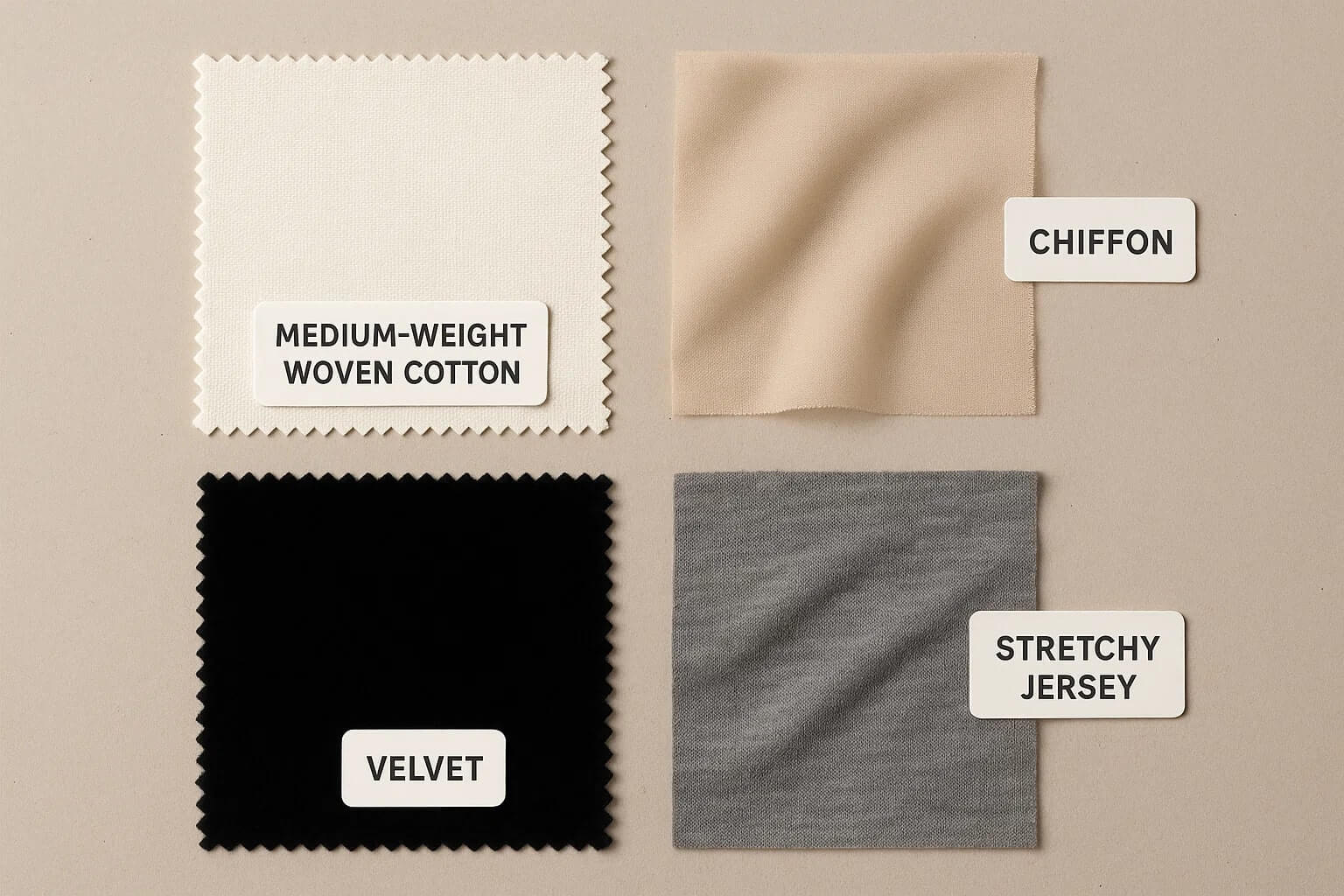
Some fabrics behave predictably while others shift, stretch or resist the needle.
What Makes a Fabric Suitable for Beginners
The simplest fabrics to handle have several basic characteristics. They remain stationary while you cut them, they glide effortlessly through the machine, and they compact neatly with minimal effort. These traits allow you to concentrate on your stitching method instead of struggling with the fabric.
Stability and Structure
Stable fabrics hold their shape well. They do not slip around and they are less likely to stretch while you sew. A medium-weight woven cotton is a good example because it behaves predictably from the moment you lay it on the cutting table. Fabrics with a tighter weave are also easier to control. They support straight seams and clean edges, which helps you build confidence quickly.
Ease of Cutting and Pinning
Some fabrics sit flat with very little encouragement. Others shift the moment you lift a pattern piece. Beginners benefit from fabrics that stay put. Cotton poplin, chambray and linen blends are popular because they hold steady under pins and scissors. These fabrics also press well. A quick press with steam gives crisp folds and tidy seams, which makes your early sewing projects look more polished.
Forgiving of Small Errors
Every beginner makes small mistakes. The right fabric can hide them. Structured fabrics help disguise tiny seam inconsistencies, while natural fibres allow you to unpick stitches and press again without leaving deep marks. This gives you room to experiment while still producing something you feel proud of.
Fabrics That Beginners Often Struggle With
Some fabrics look appealing on the shelf but behave unpredictably once you start sewing. These materials can stretch, slip or resist the needle, which makes them challenging for someone still learning the basics. It is usually best to save these for later, once you feel more confident with cutting, pinning and stitching.

Each challenging fabric has its own behaviour that affects ease of sewing.
Slippery or Very Lightweight Fabrics
- Examples include chiffon, charmeuse and lightweight satin.
- These fabrics slide across the cutting table, shift under the presser foot and distort easily.
- Pins may leave visible marks and seams can pucker if the needle is not perfectly suited to the fabric.
Heavy or Bulky Fabrics
- Thick canvas, velvet and heavy upholstery materials require more control and power from the machine.
- Seams can become bulky and difficult to press neatly.
- Beginners may find that skipped stitches or uneven feeding appear more often because the layers are dense.

Dense fabrics can cause uneven feeding and bulky seams.
Highly Stretchy or Unstable Knits
- Stretch jerseys, rib knits and very drapey knit fabrics move in all directions during cutting and sewing.
- Edges may stretch out, causing uneven hems or distorted seams.
- These fabrics often require special needles and stitches that beginners might not be familiar with.
Fabrics That Fray or Require Special Handling
- Loose weaves or satin-like fabrics can unravel quickly.
- Edges may need careful finishing, which adds extra steps early on.
- Pressing mistakes can be difficult to correct on delicate or heat-sensitive materials.
Easier Fabric Alternatives For Beginners to Start With
Beginners often find that they gain more confidence when handling fabrics that respond in a reliable manner. Medium-weight cotton fabrics are a timeless option as they maintain their shape, have a clean cut, and respond effectively to ironing. A cotton poplin or quilting cotton remains in place under the presser foot, allowing you to direct the seam without battling any stretch or shifting. These materials also reduce the stress of unpicking, which is beneficial when you are still figuring out how various seams should appear and feel.
Linen and blends of linen and cotton are another great choice. Their inherent structure facilitates tidy stitching and sharp pressing. Chambray, lightweight denim, and comparable woven materials provide a mix of firmness and gentleness, beneficial when aiming to refine intricate construction techniques. These options allow you to concentrate on precision instead of material performance, which accelerates learning and increases confidence with every new task.
When You Can Experiment With Tricky Fabrics
You might feel tempted to try silks, velvets or stretchy knits early on, especially if you have a specific project in mind. It is possible to work with them as a beginner, but a little preparation helps. Starting small keeps things manageable. A simple scarf in a slippery fabric or a basic cushion cover in velvet lets you experience how the material moves without needing to handle curves, zips or complex seams. You get a feel for the fabric without committing to a full garment.
Tools make a noticeable difference too. A fine needle, sharp scissors and plenty of pins help control slippery materials. Tissue paper under delicate fabrics can stop them sliding while you sew. A walking foot can keep layered or stretchy fabrics moving evenly. These small adjustments turn a difficult fabric into something far more approachable.
Most sewists find that their confidence grows once they understand how a fabric behaves. Challenging materials become easier with practice and patience. Trying them on a smaller scale prepares you for bigger projects later.
Choosing Fabrics That Support Your Progress
Choosing fabrics that are easy for beginners is one of the easiest methods to enhance your sewing experience. Reliable, medium-weight fabrics allow you to concentrate on your technique rather than struggling with the material. Smooth silks, dense velvets, and super stretchy knits will still be there for you when you’re prepared. Begin with materials that facilitate a smooth and enjoyable learning experience, and then progress to the bolder options once you gain confidence.

Begin with stable fabrics and gradually explore more advanced options.
If you would like guidance on selecting fabrics for your next project, you can explore beginner-friendly options, tools and sewing essentials at Franklins.